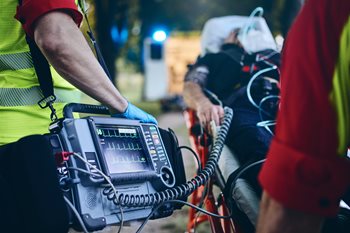
Managing Burn Emergencies: Essential Prehospital Training for EMTs and Paramedics
Burn Emergencies: More Than Skin Deep
A patient with extensive burns may appear stable initially, yet serious complications can develop rapidly. Airway swelling, inhalation injuries, fluid shifts, shock, and hypothermia can significantly complicate prehospital management.
Burn emergencies also require EMS providers to recognize that the visible injury does not always reflect the full extent of the damage.
Consider these common challenges:
-
Smoke inhalation: Patients exposed to enclosed-space fires may develop airway compromise or toxic gas exposure, even when external burns appear minor.
-
Electrical injuries: Significant internal tissue damage and cardiac complications can occur despite limited visible skin injury.
-
Chemical burns: Improper handling or delayed decontamination can increase injury severity and place emergency responders at risk.
-
Pediatric burns: Children have unique anatomical and physiological considerations that affect assessment, treatment, and fluid management.
-
Older adult patients: Age-related changes and underlying medical conditions can increase the risk of complications and poor outcomes.
Understanding these differences helps EMS professionals anticipate complications and make informed clinical decisions.
Recognizing the Hidden Dangers of Burn Injuries
One of the most important aspects of prehospital burn care is recognizing injuries that may not be immediately apparent.
Airway Compromise and Inhalation Injury
Smoke inhalation can expose patients to heated gases, toxic combustion products, and potentially life-threatening respiratory complications.
EMS providers must recognize signs of developing airway obstruction and understand the limitations of conventional pulse oximetry when carbon monoxide poisoning is suspected.
Early recognition, appropriate oxygenation and ventilation, and ongoing reassessment are essential components of patient care.
Burn Shock and Fluid Management
Severe burns can trigger substantial fluid shifts, resulting in decreased circulating blood volume and impaired tissue perfusion.
Understanding burn shock, fluid resuscitation principles, and the risks associated with excessive fluid administration helps paramedics provide appropriate stabilization while preparing patients for definitive care.
Determining Burn Severity
Accurate burn assessment involves more than estimating the percentage of skin affected.
Providers must consider burn depth, total body surface area (TBSA), anatomical location, patient age, mechanism of injury, and associated trauma.
These findings influence treatment priorities, transport decisions, and the need for specialized burn center consultation.
What Will You Learn in This EMS Continuing Education Course?
Pedagogy Education's Managing Burn Emergencies: An Evidence-Based Approach for EMS Providers provides practical, clinically relevant instruction designed for prehospital emergency care.
The course addresses six important areas of burn management:
-
Understanding Burn Injuries: Burn mechanisms, skin anatomy, injury classifications, and systemic responses to severe burns.
-
Burn Assessment and Severity Determination: Evaluating burn depth, estimating total body surface area, identifying high-risk injuries, and recognizing immediate threats.
-
Airway Emergencies and Inhalation Injuries: Recognizing airway compromise, carbon monoxide poisoning, cyanide toxicity, and respiratory complications.
-
Prehospital Burn Management and Stabilization: Safe cooling, wound care, pain management, fluid resuscitation, hypothermia prevention, and ongoing monitoring.
-
Special Burn Injuries and Patient Populations: Chemical, electrical, lightning, and radiation injuries, along with special considerations for pediatric and older adult patients.
-
Transport Decisions and Clinical Application: Burn center referral criteria, destination selection, effective patient handoff, and practical clinical scenarios.
Throughout the course, emphasis is placed on evidence-based assessment and interventions appropriate to the provider's scope of practice.
Learn from an Experienced Emergency Response Professional
The course was developed by Brad Moore, a licensed paramedic, firefighter, and Texas Department of State Health Services-licensed EMS Instructor.
With more than 18 years of public safety experience, including service in law enforcement, firefighting, and emergency medical services, Brad brings a multidisciplinary perspective to emergency response education.
His experience provides a practical foundation for instruction focused on the real-world challenges EMS professionals encounter in the field.
Convenient Online EMS Continuing Education
Emergency medical professionals work demanding schedules, often balancing long shifts, unpredictable calls, and family responsibilities.
Continuing education should support professional development without creating unnecessary scheduling challenges.
Pedagogy Education's online EMS courses provide a convenient alternative to traditional classroom instruction.
Benefits of online EMS continuing education include:
-
Study at your own pace and on your own schedule.
-
Access education without traveling to a classroom.
-
Review clinically relevant information applicable to prehospital care.
-
Complete continuing education around demanding shift schedules.
-
Provide consistent educational opportunities for EMS personnel across an organization.
Whether you are an individual EMT maintaining your continuing education or an EMS training officer coordinating education for an entire department, online learning offers a flexible solution.
EMS Continuing Education for One Provider—or Your Entire Department
Pedagogy Education understands that continuing education needs vary among EMS professionals and organizations.
Individual EMTs and paramedics can enroll in courses that address their professional development needs, while fire departments, ambulance services, and EMS agencies can incorporate online education into their ongoing training programs.
From airway emergencies and trauma management to burn care and other essential prehospital topics, Pedagogy Education continues to expand its EMS continuing education offerings.
One EMS Provider—or Your Entire Department. We make continuing education convenient, accessible, and clinically relevant.
Earn 3 EMS Continuing Education Contact Hours
<text weight="medium">Course:</text> Managing Burn Emergencies: An Evidence-Based Approach for EMS Providers
Contact Hours: 3
Course Price: $36.00
Course Author: Brad Moore
Texas EMT/AEMT/Paramedic Accreditation Statement:
Provider approved by the Texas Department of State Health Services, CE Program Approval Number #: 601011.
EMS professionals outside Texas should verify acceptance of this accreditation with their respective licensing or regulatory authorities.
Be Prepared When the Next Burn Emergency Occurs
Burn emergencies can develop quickly, and effective prehospital care begins with knowledgeable, prepared EMS professionals.
Recognizing hidden injuries, anticipating complications, and making timely treatment and transport decisions are essential to providing quality emergency care.
Whether responding to a house fire, industrial accident, chemical exposure, or pediatric scald injury, EMS providers benefit from a strong foundation in evidence-based burn assessment and management.
Strengthen your clinical knowledge, build confidence in emergency decision-making, and earn 3 continuing education contact hours with Pedagogy Education.
Enroll Today: Managing Burn Emergencies—An Evidence-Based Approach for EMS Providers
Pedagogy Education—Supporting EMS Professionals Through Convenient, Evidence-Based Online Continuing Education.