Managing Burn Emergencies: An Evidence-Based Approach for EMS Providers
Burn injuries present unique challenges for emergency medical services (EMS) providers, ranging from minor thermal injuries to life-threatening emergencies involving airway compromise, shock, and significant tissue damage. Effective prehospital burn management requires rapid recognition of injury severity, identification of associated complications, and timely interventions that minimize further tissue damage while supporting patient stabilization.
This course provides EMTs and Paramedics with an evidence-based overview of burn assessment and emergency management, including burn classifications, estimation of total body surface area affected, airway and respiratory considerations, fluid resuscitation, pain management, and wound care. Special attention is given to thermal, chemical, electrical, and inhalation injuries, as well as the unique considerations associated with pediatric and older adult patients.
Through practical assessment strategies and clinical scenarios, participants will strengthen their ability to recognize life-threatening complications, initiate appropriate interventions within their scope of practice, and make informed transport and burn center referral decisions.
Objectives
Upon successful completion of this course, participants will be able to:
- Describe the pathophysiology of burn injuries and differentiate between superficial, partial-thickness, and full-thickness burns based on clinical presentation.
- Assess burn severity using injury depth, total body surface area (TBSA), anatomical location, patient age, and associated injuries.
- Identify signs of inhalation injury, airway compromise, carbon monoxide poisoning, and cyanide toxicity, and discuss appropriate prehospital management.
- Explain evidence-based emergency care interventions for thermal, chemical, and electrical burn injuries, including scene safety, wound management, and prevention of secondary injury.
- Discuss the systemic effects of severe burns, including fluid shifts, burn shock, hypothermia, and potential cardiovascular complications.
- Differentiate between EMT- and Paramedic-level interventions for burn patients, including airway management, fluid administration, monitoring, and analgesia.
- Identify special considerations for pediatric and older adult burn patients and recognize indications for burn center consultation or transfer.
- Apply systematic assessment, stabilization, and transport principles to patients experiencing minor, moderate, and severe burn emergencies.
Curriculum
Chapter 1: Understanding Burn Injuries
- Overview of burn injuries and their significance in emergency medical care
- Skin anatomy and the body's protective functions
- Mechanisms of burn injury: thermal, chemical, electrical, and radiation
- Burn depth classifications and clinical characteristics
- Local tissue damage, inflammation, and systemic responses
- Factors influencing burn severity and patient outcomes
- Scene safety, mechanism of injury, and initial patient assessment
- Primary assessment and identification of immediate life threats
- Evaluating burn depth, appearance, and anatomical location
- Estimating total body surface area using the Rule of Nines, palmar method, and pediatric considerations
- Recognizing circumferential burns and associated complications
- Identifying high-risk patients and injuries requiring specialized care
- Mechanisms and consequences of smoke inhalation
- Recognizing upper and lower airway injury
- Airway edema and signs of impending obstruction
- Carbon monoxide exposure and limitations of conventional pulse oximetry
- Cyanide toxicity associated with smoke inhalation
- Oxygen administration, ventilation, and advanced airway considerations
- Monitoring and reassessment during transport
- Stopping the burning process and preventing additional tissue injury
- Cooling burns safely and preventing hypothermia
- Initial wound care, dressings, and blister management
- Pain assessment and management: EMT versus Paramedic interventions
- Fluid shifts, burn shock, and indications for fluid resuscitation
- IV/IO access, crystalloid administration, and avoiding excessive fluid replacement
- Ongoing monitoring, reassessment, and documentation
- Chemical burns: exposure management, decontamination, and responder safety
- Electrical injuries: internal tissue damage, cardiac dysrhythmias, and associated trauma
- Lightning injuries and related cardiovascular and neurological complications
- Radiation injuries and general prehospital safety considerations
- Pediatric burn injuries: anatomical differences, fluid considerations, and nonaccidental trauma
- Older adult burn patients and increased risk of complications
- Identifying injuries requiring immediate stabilization or rapid transport
- American Burn Association referral and consultation criteria
- Selecting an appropriate destination: emergency department, trauma center, or burn center
- Coordinating patient care and providing effective handoff communication
- Clinical scenario: adult patient with extensive thermal burns and suspected inhalation injury
- Clinical scenario: pediatric patient with a scald injury
- Key principles of effective prehospital burn management
Price: $36.00
Contact Hours: 3
Course Author
Brad Moore
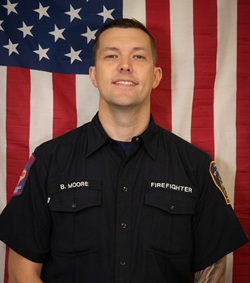
Brad Moore is a dedicated public safety professional with over 18 years of service in emergency response. He has been a firefighter since 2021 and became a licensed paramedic in 2023, providing critical care in high-pressure situations. Before transitioning to Fire and EMS, Brad served for 12 years as a police officer, where he developed strong skills in leadership, crisis management, public safety, and community service. He is also a licensed EMS Instructor through the Texas Department of State Health Services, further extending his expertise in training and education for emergency responders.
Course Accreditation
Provider approved by the Texas Department of State Health Services, CE Program Approval Number #: 601011. Out of state participants must verify acceptance of this accreditation with their own licensing board.