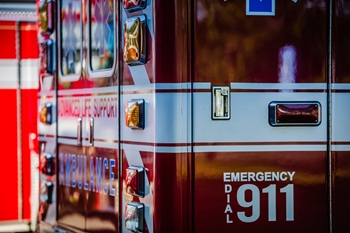
Bleeding and Shock: When Minutes Matter, Preparation Matters
More Than “Stop the Bleeding”
Hemorrhage control is a critical EMS skill, but understanding the physiology behind a deteriorating patient helps providers make better clinical decisions.
The course begins with the circulatory system and the fundamentals of perfusion, oxygen delivery, and cellular survival. From there, learners examine external bleeding and current approaches to hemorrhage control, including:
- Tourniquet application
- Wound packing
- Hemostatic agents
- Evidence-based hemorrhage control principles
The course also addresses a more difficult challenge: bleeding you cannot see.
Providers review the recognition and management of internal bleeding, including mechanism of injury, trauma-induced coagulopathy, anticoagulant considerations, and the importance of rapid trauma destination decisions.
Understanding the Different Faces of Shock
Shock isn't a single condition with a single treatment.
Being able to distinguish the underlying pathophysiology can help EMS professionals recognize what is happening and prioritize appropriate interventions.
This course explores:
- Hypovolemic shock
- Cardiogenic shock
- Obstructive shock
- Distributive shock, including septic, anaphylactic, and neurogenic shock
- Respiratory-related shock
Learners also explore contemporary prehospital treatment concepts, including permissive hypotension, balanced resuscitation, tranexamic acid (TXA), and early identification of sepsis and septic shock.
Clinical application scenarios help connect these concepts to the realities of prehospital assessment and treatment.
Building a Systematic Approach When Seconds Count
High-acuity emergencies can become complicated quickly. A systematic assessment helps providers identify immediate threats and determine which interventions take priority.
Throughout the course, learners apply the XABCDE framework, emphasizing the importance of addressing catastrophic hemorrhage while continuing a structured assessment of airway, breathing, circulation, disability, and exposure.
By the end of the course, participants should be better prepared to:
- Differentiate types of external bleeding and appropriate control measures
- Recognize signs and symptoms of internal bleeding
- Explain the indications, mechanism, and timing of TXA
- Differentiate major categories of shock based on pathophysiology
- Discuss balanced resuscitation and permissive hypotension
- Recognize early sepsis and septic shock in the prehospital environment
Why Online EMS Continuing Education Makes Sense
EMS professionals don't exactly work predictable nine-to-five schedules.
Between long shifts, overtime, family responsibilities, and the need to actually recover between calls, attending a traditional classroom course can create another scheduling challenge.
Online continuing education puts the learner back in control.
Instead of arranging life around a classroom schedule, EMS professionals can complete education when and where it works for them. Online learning also makes it easier to revisit complex material, slow down when a concept deserves additional attention, and move efficiently through familiar topics.
For clinical subjects such as bleeding and shock, that flexibility can be especially valuable. Learners have an opportunity to focus on the why behind assessment and treatment—not simply memorize another protocol.
Online education also removes geography from the equation. Whether you're at home, between shifts, or simply don't live near a convenient training location, professional development is still within reach.
Evidence-Based Education That Fits an EMS Schedule
Bleeding and Shock: Evidence-Based Prehospital Assessment and Management is a 1.5-contact-hour online course designed to strengthen the EMS professional's understanding of some of the most time-critical conditions encountered in prehospital care.
The course is authored by Brad Moore, a licensed paramedic, firefighter, former law enforcement officer, and licensed EMS instructor through the Texas Department of State Health Services.
For Texas EMS professionals, Pedagogy Education is a Texas Department of State Health Services-approved provider, and this course provides 1.50 contact hours. Out-of-state participants should verify acceptance with their individual licensing board.
The course is currently available for $18.
When the patient in front of you is bleeding or rapidly progressing into shock, there may be only minutes to recognize the problem and intervene.
Continuing education gives you something those minutes can't: time to prepare before the call comes.
Ready to strengthen your assessment and management of bleeding and shock?
Explore Bleeding and Shock: Evidence-Based Prehospital Assessment and Management from Pedagogy Education and complete your continuing education online, on your schedule.