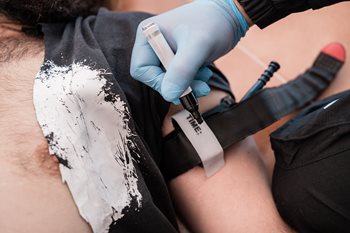
Bleeding and Shock: Evidence-Based Prehospital Assessment and Management
This comprehensive continuing education course provides an in-depth exploration of the pathophysiology, assessment, and prehospital management of bleeding and shock. Providers will review circulatory system anatomy and physiology as it relates to perfusion, oxygen delivery, and cellular survival. The course examines external hemorrhage control using modern trauma principles including tourniquet application, wound packing, and hemostatic agents. Internal bleeding recognition and management strategies are discussed, with emphasis on mechanism of injury, anticoagulant considerations, and rapid trauma destination decisions.
Additionally, this course explores the various categories of shock — hypovolemic, cardiogenic, obstructive, distributive (septic, anaphylactic, neurogenic), and respiratory-related — and integrates current evidence-based prehospital treatment strategies, including permissive hypotension, balanced resuscitation concepts, tranexamic acid (TXA) administration, and early sepsis identification.
Through detailed explanations and clinical application scenarios, EMS providers will strengthen their ability to rapidly identify life-threatening conditions, prioritize interventions using the XABCDE framework, and implement modern resuscitation principles that improve survival and reduce preventable mortality.
Objectives
Upon completion of this course, the participant should be able to:
- Describe circulatory system anatomy and physiology relevant to perfusion.
- Differentiate types of external bleeding and appropriate control measures.
- Identify signs and symptoms of internal bleeding.
- Explain TXA indications, mechanism, and timing.
- Differentiate types of shock based on pathophysiology.
- Discuss modern trauma resuscitation concepts including balanced resuscitation and permissive hypotension.
- Recognize early sepsis and septic shock in the prehospital setting.
Curriculum
Chapter 1: Circulatory System and Perfusion
Chapter 2: External Bleeding and Evidence-Based Hemorrhage Control
Chapter 3: Internal Bleeding, Trauma-Induced Coagulopathy, and Tranexamic Acid (TXA)
Chapter 4: Hypovolemic and Cardiogenic Shock
Chapter 5: Distributive, Obstructive, and Respiratory Shock
Price: $18.00
Contact Hours: 1.5
Course Author

Brad Moore
Brad Moore is a dedicated public safety professional with over 18 years of service in emergency response. He has been a firefighter since 2021 and became a licensed paramedic in 2023, providing critical care in high-pressure situations. Before transitioning to Fire and EMS, Brad served for 12 years as a police officer, where he developed strong skills in leadership, crisis management, public safety, and community service. He is also a licensed EMS Instructor through the Texas Department of State Health Services, further extending his expertise in training and education for emergency responders.
Course Accreditation
Provider approved by the Texas Department of State Health Services, course provides 1.50 contact hour(s). CE Program Approval Number #: 601011. Out-of-state participants must verify acceptance of this accreditation with their own licensing board.