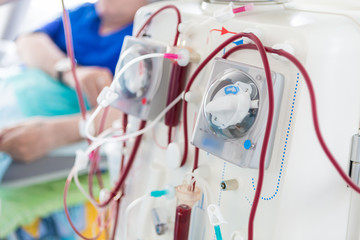
Hemodialysis Catheter Care: Strengthen Your Knowledge, Reduce Patient Risk
Why Hemodialysis Catheter Education Matters
Although a CVC may be appropriate in certain circumstances, it carries risks that nurses need to understand. The CDC identifies central venous catheters as the hemodialysis access type with the highest risk of bloodstream infection; fistulas have the lowest risk. Learn more from the CDC.
Infection is only part of the picture. Thrombosis is another complication addressed in this course. Understanding both risks helps nurses connect catheter-care practices with the problems those practices are intended to prevent.
For nurses who regularly care for patients with dialysis catheters—and those who encounter them less often—focused education can help keep essential knowledge current.
What Does the Course Cover?
The course begins with the broader vascular-access picture, including arteriovenous fistulas and grafts. It then explores circumstances in which a hemodialysis CVC may be considered reasonable under current guidelines.
From there, the curriculum moves into catheter care and maintenance, covering:
-
Differences between general-use CVCs and hemodialysis CVCs.
-
Infection-control considerations and dressing changes.
-
Flushing and locking.
-
Locking solutions, including heparin, citrate, antibiotic locks, and antimicrobial/heparin locks.
-
Common complications associated with hemodialysis CVC use.
This progression connects access selection with the care considerations nurses encounter in practice. It also makes the course a useful option for nurses seeking a focused review of hemodialysis catheter risks and maintenance.
A Focused Review with Practical Relevance
The course’s published objectives emphasize knowledge nurses can use to better understand dialysis access and catheter care. Upon completion, participants should be able to identify the two main arteriovenous access options, recognize circumstances supporting CVC use, discuss two common complications, and identify three available catheter locking solutions.
These topics offer a starting point for reflecting on your own practice: Do you understand how a hemodialysis catheter differs from other central lines? Can you explain its major risks? Are you familiar with the locking solutions you may encounter?
The course provides dedicated time to revisit those questions and build a stronger foundation for care within your role and facility requirements.
Learn from an Experienced Infusion Nurse
Course author Pamela Clark, CRNI, brings more than 35 years of experience in infusion therapy and education. Her background includes acute care, long-term care, home infusion, and ambulatory infusion settings, along with educating licensed nurses and patients.
That breadth of experience is relevant to a subject nurses may encounter across multiple care environments.
Invest in Your Catheter-Care Knowledge
Offering one contact hour for $12, this course makes focused professional development accessible. It is a practical educational option for licensed nurses who want to review hemodialysis CVC care or strengthen their understanding of catheter-related risks.
Nurses should apply course learning within their authorized scope of practice and employer competency requirements. The course page specifically notes that state board positions on LPN/LVN participation in infusion therapy, including hemodialysis, vary.
Ready to strengthen your knowledge of hemodialysis catheter care?
Enroll in Hemodialysis Central Venous Catheters: Risk Reduction Strategies and take the next step toward more informed nursing practice.