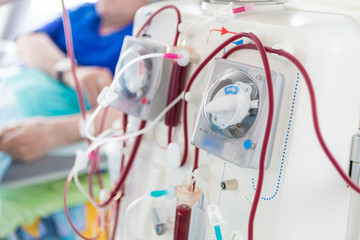
Hemodialysis Central Venous Catheters: Risk Reduction Strategies
This instructional course has been designed to educate the licensed nurse regarding the use of a hemodialysis central venous catheter (CVC) in a patient with end-stage kidney disease. Although a central venous catheter is not the preferred venous access for hemodialysis, there are circumstances in which a CVC is appropriate. However, a CVC is more prone to complications than an arteriovenous fistula or arteriovenous graft, including, but not limited to, thrombosis and catheter-related bloodstream infections. The nurse caring for a patient with a hemodialysis central venous catheter must be knowledgeable about these risks and the actions required to minimize the potential for negative outcomes resulting from these risks.
State Boards of Nursing have varying positions on the role of the LPN/LVN in the administration of infusion therapy, which includes participation in hemodialysis. A link to each state board of nursing is listed here. Competency requirements are obtained and maintained through the nurse’s employer, facility or institution.
Questions? Check out our FAQs page and How Online IV Certification Works!
Objectives
Upon completion of this course, the participant will be able to:
- Identify the two main hemodialysis arteriovenous access options.
- Recognize at least three circumstances in which a hemodialysis central venous catheter is considered reasonable, according to current guidelines.
- Discuss two common complications associated with the use of a central venous catheter for hemodialysis.
- Identify three available hemodialysis central venous catheter locking solutions.
Curriculum
Chapter 1: Introduction
- Scope of Problem
- Hemodialysis Arteriovenous Access Options
Chapter 2: Care and Maintenance of a Hemodialysis Central Venous Catheter
- General-use Central Venous Catheter vs. Hemodialysis Central Venous Catheter
- Infection Control:
- Dressing Change
- Flushing
- Locking
- Heparin
- Citrate
- Antibiotic Lock
- Antimicrobial/Heparin Lock
Chapter 3: References
- California BON Required Implicit Bias Information
Price: $12.00
Contact Hour: 1
Course Author
Pamela Clark
Pamela Clark, CRNI, is an infusion nurse with the Houston Methodist Sugar Land Hospital. She has more than 35 years of experience in infusion therapy and infusion education with both licensed nurses and patients. Her experience spans multiple infusion settings including: acute care, long-term care, home infusion, and ambulatory infusion care. She also has experience in oncology and oncology research.
Read Full BioCourse Accreditation
See our Accreditation Statements page to view our accreditation information.