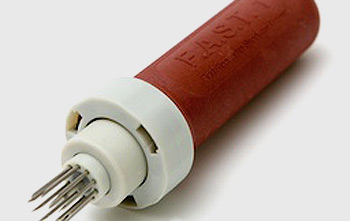
IO Access for EMTs and Paramedics
What is Intraosseous IO Access
Intraosseous access involves inserting a needle directly into the bone marrow cavity, allowing medications and fluids to enter the vascular system quickly. The bone marrow acts as a non-collapsible entry point into circulation, making it highly effective during critical emergencies.
Unlike peripheral IV access, IO access can typically be established in under one minute, even in severely compromised patients.
When Should EMTs Use IO Access
IO access is indicated when IV access cannot be rapidly established and immediate intervention is required.
Common EMS indications include:
- Cardiac arrest
- Severe trauma or hemorrhagic shock
- Respiratory failure
- Status epilepticus
- Severe dehydration
- Burns or collapsed veins
What Can Be Given Through an IO Line
One of the biggest advantages of IO access is its versatility. Nearly anything that can be administered intravenously can also be given through an IO line.
This includes:
- ACLS medications such as epinephrine and amiodarone
- IV fluids such as normal saline or lactated ringers
- Blood products
- Vasopressors
- Sedatives and analgesics
Medication absorption via IO is comparable to IV delivery, making it equally effective in emergencies.
Benefits of IO Access in the Field
IO access offers several advantages for EMS providers:
- Rapid access in under one minute
- High success rates even in critically ill patients
- Works in patients with collapsed or difficult veins
- Can be used across all age groups
- Allows immediate delivery of life-saving medications
Studies show IO access has very high success rates and is often easier to establish than IV access in unstable patients.
Risks and Complications
While IO access is generally safe, EMTs must be trained to recognize and prevent complications.
Potential risks include:
- Extravasation and compartment syndrome
- Infection such as osteomyelitis
- Bone fracture
- Pain during infusion
Most complications are rare and can be minimized with proper technique and training.
Why IO Training Matters for EMTs and Paramedics
Despite its effectiveness, IO access is still underutilized in emergency care. One of the biggest barriers is lack of confidence and training among providers.
This is exactly why continuing education is so important. EMS providers must stay current, confident, and competent in high-risk, low-frequency procedures like IO insertion.
Introducing Pedagogy Education IO Access Course
If you are looking to strengthen your skills and confidence, Pedagogy Education offers a comprehensive course designed specifically for EMS providers:
IO Access for EMTs and Paramedics: Indications Technique and Clinical Application
This course is built to help you:
- Understand when to choose IO over IV access
- Identify proper anatomical landmarks
- Perform IO insertion safely and efficiently
- Recognize complications and troubleshoot issues
- Apply real-world EMS scenarios to clinical decision making
Why Choose Pedagogy Education for EMS Continuing Education
Pedagogy Education is a trusted provider of online continuing education for healthcare professionals. Their courses are designed with real-world application in mind.
Benefits include:
- 100 percent online and self-paced learning
- EMS focused, practical content you can use immediately
- Affordable and convenient continuing education
- Designed for busy EMTs and paramedics
- Evidence-based material aligned with current practice
Whether you are new to IO access or looking to sharpen your skills, Pedagogy courses provide the flexibility and quality EMS providers need.
Final Thoughts
Intraosseous access is one of the most powerful tools available in prehospital emergency care. When seconds count and IV access fails, IO access can save lives.
For EMTs and paramedics, mastering this skill is not just beneficial. It is essential.
Take the next step in your EMS education and build confidence in this life-saving procedure with Pedagogy Education.
References
StatPearls Intraosseous Vascular Access
Medscape Intraosseous Access Overview
Patient.info Emergency Intraosseous Infusion
AMBOSS Intraosseous Access
E3 Learning IO Access Guide
EMS1 Intraosseous Access Article