MRSA in the Field: Identification, Treatment, and Prevention
Methicillin-resistant Staphylococcus aureus (MRSA) remains one of the most significant multidrug-resistant organisms encountered in both healthcare and community settings. For EMS professionals, the risk of exposure is uniquely elevated due to frequent contact with diverse patient populations, unpredictable environments, and high-touch equipment. MRSA is no longer confined to hospitals—it is commonly encountered in homes, schools, athletic facilities, and long-term care settings, making it a routine concern in prehospital care. Understanding how MRSA spreads, presents, and persists in the environment is essential for protecting both providers and patients.
This course provides a comprehensive, evidence-based overview of MRSA tailored specifically to EMTs and paramedics. Learners will explore the pathophysiology of MRSA, current epidemiological trends, and the differences between community-acquired and healthcare-associated infections. Emphasis is placed on recognizing MRSA in the field, including common skin presentations often mistaken for minor conditions, as well as identifying signs of more severe or systemic infection. The course also highlights EMS-specific exposure risks, including contaminated equipment, ambulance environments, and patient transport between facilities.
In addition to clinical recognition, this course focuses heavily on practical application. EMS providers will review current CDC-recommended infection control practices, including proper use of personal protective equipment (PPE), hand hygiene, and effective cleaning and disinfection techniques. Guidance is also provided on patient management considerations, post-exposure procedures, and documentation requirements. By the end of this course, learners will be equipped with the knowledge and tools necessary to reduce transmission risk, enhance patient care, and maintain a safe working environment in the face of evolving antibiotic-resistant threats.
Objectives
Upon completion of this course, the participant should be able to:
-
Define methicillin-resistant Staphylococcus aureus (MRSA) and differentiate it from methicillin-sensitive Staphylococcus aureus (MSSA).
-
Distinguish between colonization and infection and identify the differences between community-acquired (CA-MRSA) and healthcare-associated (HA-MRSA).
-
Describe common modes of MRSA transmission, including contact transmission and the role of fomites in the EMS environment.
-
Identify the signs and symptoms of MRSA infections, including skin presentations and indicators of systemic involvement.
-
Differentiate appropriate infection control practices in EMS, including Standard Precautions, proper PPE use, and cleaning versus disinfection principles.
Curriculum
Chapter 1: Understanding MRSA and Antibiotic Resistance
-
What is MRSA?
-
Antibiotic resistance overview (beta-lactam resistance)
-
MSSA vs MRSA
-
CA-MRSA vs HA-MRSA
-
Current U.S. prevalence and trends
-
Colonization vs infection
-
EMS relevance
Chapter 2: Transmission, Risk, and EMS Exposure
-
Modes of transmission (direct, indirect, fomites)
-
MRSA survival on surfaces
-
EMS-specific exposure risks:
-
Ambulances
-
Equipment contamination
-
Multi-facility transport
-
-
High-risk populations
-
Case study: MRSA in fire stations/EMS environments
Chapter 3: Clinical Presentation and Patient Assessment
-
Skin infections (abscess, furuncle, “spider bite” presentation)
-
Red flags for MRSA
-
Systemic involvement (sepsis, pneumonia, etc.)
-
EMS assessment priorities:
-
Airway/breathing complications
-
Sepsis screening (qSOFA/SIRS integration)
-
-
Differential considerations
-
When to suspect MRSA in prehospital care
Chapter 4: EMS Management, Prevention, and Infection Control
-
PPE and Standard Precautions
-
Contact precautions
-
Wound care and containment
-
EMS treatment considerations:
-
Supportive care
-
When antibiotics matter (paramedic awareness, not prescribing)
-
-
Cleaning vs disinfection (very EMS-relevant)
-
Ambulance decontamination best practices
-
Post-exposure procedures and documentation
-
Protecting family and coworkers
Price: $12.00
Contact Hour: 1
Course Author
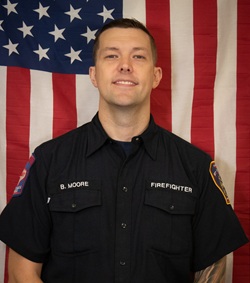
Brad Moore
Brad Moore is a dedicated public safety professional with over 18 years of service in emergency response. He has been a firefighter since 2021 and became a licensed paramedic in 2023, providing critical care in high-pressure situations. Before transitioning to Fire and EMS, Brad served for 12 years as a police officer, where he developed strong skills in leadership, crisis management, public safety, and community service. He is also a licensed EMS Instructor through the Texas Department of State Health Services, further extending his expertise in training and education for emergency responders.
Course Accreditation
Provider approved by the Texas Department of State Health Services, course provides 1.00 contact hour(s). CE Program Approval Number #: 601011.