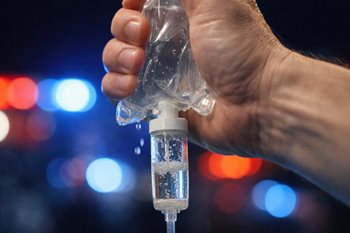
IO Access for EMTs & Paramedics: Indications, Technique, and Clinical Application
Building on foundational concepts from current literature and training resources, this course emphasizes real-world EMS application, decision-making under pressure, and integration into cardiac arrest, shock, and trauma care. Providers will gain confidence in selecting appropriate IO sites, utilizing modern devices, managing patient pain, and ensuring safe and effective medication and fluid administration.
This course aligns with current American Heart Association (AHA) resuscitation guidelines and reflects best practices in prehospital emergency medicine.
Objectives
Upon completion of this course, the participant will be able to:
- Identify appropriate indications for intraosseous (IO) access in prehospital emergency scenarios, including cardiac arrest, shock, and failed IV access.
- Differentiate between absolute and relative contraindications to IO placement based on patient presentation.
- Recognize key anatomical structures relevant to IO access, including cancellous bone and the medullary cavity.
- Select appropriate IO insertion sites (e.g., proximal tibia, proximal humerus) based on patient age, condition, and clinical context.
- Describe correct IO insertion procedures, including confirmation of placement and required flushing techniques.
- Apply principles of medication and fluid administration via IO access, including appropriate dosing and the need for saline flush.
- Identify common complications associated with IO access, including extravasation and compartment syndrome, and determine appropriate interventions.
- Recognize the importance of pain management during IO infusion and select appropriate interventions such as lidocaine administration.
Curriculum
Chapter 1: Introduction to Intraosseous Infusion in EMS
- Role of vascular access in prehospital care
- Why IO access matters in critical patients
- Current guidelines (AHA, EMS protocols)
- Overview of IO vs IV access
- EMS-focused case introduction
- Bone structure (cortex, medullary cavity, marrow)
- Vascular pathways and drug absorption
- Differences in pediatric vs adult anatomy
- Why IO is “non-collapsible”
- When to choose IO (failed IV, time-sensitive emergencies)
- Absolute vs relative contraindications
- EMS protocol considerations
- Risk vs benefit in critical patients
- Proximal tibia, distal tibia, humerus, sternum
- Pediatric vs adult considerations
- Device types (manual, spring-loaded, powered)
- Site selection in trauma and special populations
- Step-by-step insertion process
- Equipment preparation
- Confirmation of placement
- Troubleshooting failed attempts
- Integration into cardiac arrest and shock management
- Common complications (extravasation, compartment syndrome, infection)
- Prevention strategies
- Lidocaine use and pain control
- Managing conscious vs unconscious patients
- Medications via IO (ACLS drugs, fluids, blood products)
- Flush protocols and flow optimization
- Pressure infusion techniques
- Case-based EMS scenarios
- Expanded EMS case scenario
- Decision-making under pressure
- Common mistakes and “critical failures”
- Provider confidence and skill retention
- EMS clinical pearls
- Practical application in the field
Price: $18.00
Contact Hours: 1.5
Course Author

Brad Moore
Brad Moore is a dedicated public safety professional with over 18 years of service in emergency response. He has been a firefighter since 2021 and became a licensed paramedic in 2023, providing critical care in high-pressure situations. Before transitioning to Fire and EMS, Brad served for 12 years as a police officer, where he developed strong skills in leadership, crisis management, public safety, and community service. He is also a licensed EMS Instructor through the Texas Department of State Health Services, further extending his expertise in training and education for emergency responders.
Course Accreditation
Provider approved by the Texas Department of State Health Services, course provides 1.50 contact hour(s). CE Program Approval Number #: 601011.