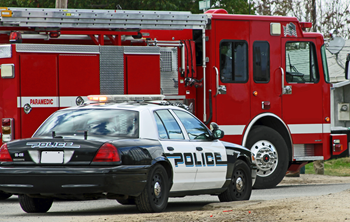
Gunshot Wounds and Blast Injuries: Prehospital Assessment and Management for EMS
Gunshot wounds and blast injuries can produce life-threatening hemorrhage, respiratory compromise, and internal injuries that are not immediately apparent. Effective prehospital care requires rapid assessment, timely intervention, and an understanding of how the mechanism of injury influences patient presentation.
Designed for firefighters, EMTs, and paramedics, this course examines scene safety, firearm and blast injury mechanisms, systematic trauma assessment, hemorrhage control, airway and chest injury management, and recognition of shock. Additional topics include concealed and delayed blast injuries, mass-casualty triage, transport priorities, and effective patient handoff. Case-based review questions reinforce clinical decision-making, with basic and advanced care considerations identified according to provider training, agency protocols, and medical direction.
Designed for firefighters, EMTs, and paramedics, this course examines scene safety, firearm and blast injury mechanisms, systematic trauma assessment, hemorrhage control, airway and chest injury management, and recognition of shock. Additional topics include concealed and delayed blast injuries, mass-casualty triage, transport priorities, and effective patient handoff. Case-based review questions reinforce clinical decision-making, with basic and advanced care considerations identified according to provider training, agency protocols, and medical direction.
Objectives
Upon completion of this course, participants will be able to:
- Identify appropriate scene safety responses and the need to reassess changing threat conditions.
- Differentiate wound ballistics terminology and the four major blast injury mechanisms.
- Recognize assessment findings associated with concealed hemorrhage and compensated shock.
- Identify appropriate tourniquet management and indications and limitations of tranexamic acid.
- Recognize respiratory deterioration, limitations of pulse oximetry, and appropriate responses to worsening chest injury.
- Identify appropriate mass-casualty triage, patient tracking, destination coordination, and handoff practices.
Curriculum
Chapter 1: Scene Safety and the Initial Response
- Assessing ongoing violence, secondary devices, fire, structural instability, and hazardous exposures
- Staging, incident command, law enforcement coordination, and resource requests
- Understanding threat-based care priorities and the role of trained rescue task force personnel
- Basic energy transfer, permanent wound tracks, temporary cavitation, fragmentation, and tissue vulnerability
- Clinically relevant differences among handgun, rifle, and shotgun injuries
- Why external wound appearance cannot reliably establish internal injury severity, projectile trajectory, or entrance versus exit wounds
- Using a structured primary assessment that prioritizes immediately life-threatening hemorrhage
- Exposing and examining the patient while preventing heat loss and identifying additional wounds
- Recognizing critical head, neck, abdominal, pelvic, and extremity injuries
- Trending mental status, perfusion, respiratory findings, and vital signs; incorporating pediatric and older-adult considerations
- Direct pressure, wound packing, hemostatic dressings, and extremity tourniquets
- Junctional bleeding, treatment reassessment, and documentation of tourniquet application
- Recognizing internal hemorrhage and compensated versus decompensated shock
- Preventing hypothermia
- Airway threats associated with facial and neck trauma; basic support and ALS escalation
- Recognizing open pneumothorax, tension pneumothorax, and suspected hemothorax
- Chest seal use, reassessment, and responding to worsening respiratory distress
- Oxygenation, assisted ventilation, and decompression considerations
- Primary, secondary, tertiary, and quaternary blast injury mechanisms
- How enclosed spaces, distance, and structural collapse influence injury patterns
- Recognizing blast lung injury, abdominal injury, traumatic brain injury, ear injury, and penetrating fragments
- Associated burns, inhalation exposure, crush injury, and traumatic amputation
- Concealed injuries and delayed deterioration
- Distinguishing routine trauma assessment from mass-casualty triage
- Applying the adopted triage system and repeating triage as conditions change
- Trauma destination selection, early notification, and considerations during longer rural transports
- Structured handoff
- Patient psychological support and responder recovery resources
Price: $36.00
Contact Hours: 3
Course Author
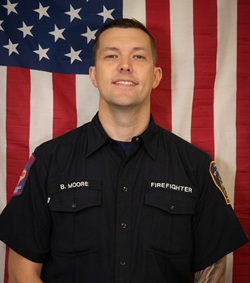
Brad Moore
Brad Moore is a dedicated public safety professional with over 18 years of service in emergency response. He has been a firefighter since 2021 and became a licensed paramedic in 2023, providing critical care in high-pressure situations. Before transitioning to Fire and EMS, Brad served for 12 years as a police officer, where he developed strong skills in leadership, crisis management, public safety, and community service. He is also a licensed EMS Instructor through the Texas Department of State Health Services, further extending his expertise in training and education for emergency responders.
Course Accreditation
Provider approved by the Texas Department of State Health Services, CE Program Approval Number #: 601011. Out of state participants must verify acceptance of this accreditation with their own licensing board.