EMS Communication and Documentation: Essential Skills for Quality Patient Care
Effective communication and accurate documentation are foundational skills for every EMS provider. Patient care does not begin when treatment is started—it begins the moment information is received from dispatch and continues through scene interaction, transport, handoff, and final written documentation.
This course provides in-depth education on EMS communication systems, professional radio practices, interpersonal communication, structured handoff techniques, and legally sound documentation. Participants will explore the essential components of the Prehospital Care Report (PCR), consent and refusal considerations, HIPAA responsibilities, and strategies for avoiding common communication failures.
Through real-world case studies, Texas EMS providers will apply lessons learned to improve patient safety, professional credibility, and overall system performance.
This course provides in-depth education on EMS communication systems, professional radio practices, interpersonal communication, structured handoff techniques, and legally sound documentation. Participants will explore the essential components of the Prehospital Care Report (PCR), consent and refusal considerations, HIPAA responsibilities, and strategies for avoiding common communication failures.
Through real-world case studies, Texas EMS providers will apply lessons learned to improve patient safety, professional credibility, and overall system performance.
Objectives
Upon completion of this course, the participant should be able to:
- Explain the structure and function of modern EMS communication systems.
- Identify best practices for radio communication with dispatch and medical direction.
- Describe the legal and clinical importance of the Prehospital Care Report (PCR).
- Identify required elements of complete and accurate EMS documentation.
- Explain the processes of patient consent and informed refusal.
Curriculum
Chapter 1: EMS Communication Systems and Professional Interaction
- The EMS Communication Continuum
- The Evolution of EMS Communication Systems
- Components of EMS Communication Equipment
- Equipment Maintenance and Reliability
- Professional Radio Etiquette
- Communication with Dispatch
- Communicating with Medical Direction
- The Critical Moment: Hospital Handoff
- Interpersonal Communication with Patients and Families
- The True Role of Documentation in EMS
- The PCR as a Legal Document
- Required Elements of a Complete PCR
- Writing an Effective Narrative
- Common Documentation Errors
- Electronic PCR Considerations
- Patient Confidentiality and HIPAA
- Documenting Consent and Refusal
- Case Study 1 – The “En Route” That Wasn’t
- Case Study 2 – “I Thought You Called the Hospital”
- Case Study 3 – Dangerous Dispatch Assumptions
- Case Study 4 – The Missing Neurological Exam
- Case Study 5 – The Questionable Refusal
Price: $12.00
Contact Hour: 1
Course Author
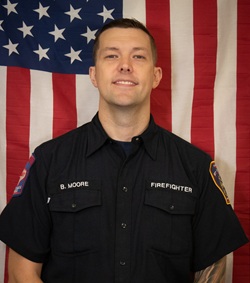
Brad Moore
Brad Moore is a dedicated public safety professional with over 18 years of service in emergency response. He has been a firefighter since 2021 and became a licensed paramedic in 2023, providing critical care in high-pressure situations. Before transitioning to Fire and EMS, Brad served for 12 years as a police officer, where he developed strong skills in leadership, crisis management, public safety, and community service. He is also a licensed EMS Instructor through the Texas Department of State Health Services, further extending his expertise in training and education for emergency responders.
Course Accreditation
Provider approved by the Texas Department of State Health Services, CE Program Approval Number #: 601011. Out of state participants must verify acceptance of this accreditation with their own licensing board.