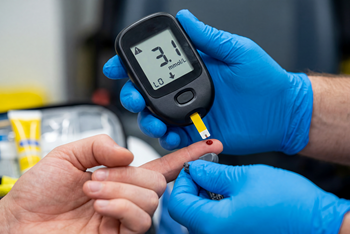
Diabetic, Thyroid, and Adrenal Emergencies: Recognition, Response, and Prehospital Care
This course reviews the endocrine functions most relevant to emergency assessment and explores hypoglycemia, diabetic ketoacidosis, hyperosmolar hyperglycemic state, thyroid storm, myxedema coma, and adrenal crisis. Emphasis is placed on identifying clinical warning signs, obtaining a focused history, interpreting blood glucose findings in context, initiating appropriate prehospital interventions, and recognizing the need for timely transport.
Additional topics include insulin pumps and continuous glucose monitors, medication-related emergencies, recurrent hypoglycemia, and considerations for pediatric patients, older adults, and pregnant patients. Case-based examples reinforce clinical judgment, reassessment, and communication with the receiving facility. Basic and advanced interventions are discussed within the context of provider scope of practice, local protocols, and medical direction.
Objectives
Upon completion of this course, participants will be able to:
- Explain how insulin, glucagon, thyroid hormones, and adrenal hormones influence glucose regulation, metabolism, fluid balance, and cardiovascular function.
- Identify assessment findings and precipitating factors associated with endocrine emergencies.
- Differentiate the typical presentations of hypoglycemia, diabetic ketoacidosis, and hyperosmolar hyperglycemic state while recognizing the limitations of field assessment.
- Select appropriate prehospital interventions for hypoglycemia and suspected hyperglycemic crises based on patient condition, provider scope, and local protocols.
- Recognize findings suggestive of thyroid storm, myxedema coma, and adrenal crisis.
- Describe how diabetes medications, insulin delivery devices, continuous glucose monitors, age, and pregnancy can affect emergency assessment and care.
Curriculum
Chapter 1: Endocrine Function and the EMS Assessment
- Endocrine anatomy and essential hormone functions
- Effects of hormonal imbalances on body systems
- Common triggers of endocrine emergencies
- Initial assessment, focused history, and differential considerations
- Causes, risk factors, and clinical presentation
- Blood glucose assessment and interpretation
- Prehospital treatment options
- Reassessment and recurrent hypoglycemia
- Transport considerations and patient refusal
- Pathophysiology and precipitating factors
- Recognition of diabetic ketoacidosis and hyperosmolar hyperglycemic state
- Euglycemic DKA and medication-related risks
- Prehospital stabilization and fluid management
- Monitoring, reassessment, and transport priorities
- Thyroid function and hormonal disturbances
- Thyroid storm recognition and common triggers
- Myxedema coma recognition and common triggers
- Prehospital assessment and supportive care
- Monitoring and transport priorities
- Adrenal function and adrenal insufficiency
- Glucocorticoid therapy and adrenal suppression
- Adrenal crisis triggers and clinical presentation
- Prehospital stabilization and protocol-directed treatment
- Emergency medication information and medical consultation
- Pediatric, older adult, and pregnant patients
- Insulin pumps and continuous glucose monitors
- Medication-related assessment considerations
- Case-based clinical decision-making and reassessment
- Transport, documentation, and receiving-facility handoff
- References
Price: $18.00
Contact Hours: 1.5
Course Author

Brad Moore
Brad Moore is a dedicated public safety professional with over 18 years of service in emergency response. He has been a firefighter since 2021 and became a licensed paramedic in 2023, providing critical care in high-pressure situations. Before transitioning to Fire and EMS, Brad served for 12 years as a police officer, where he developed strong skills in leadership, crisis management, public safety, and community service. He is also a licensed EMS Instructor through the Texas Department of State Health Services, further extending his expertise in training and education for emergency responders.
Course Accreditation
Provider approved by the Texas Department of State Health Services, CE Program Approval Number #: 601011. Out of state participants must verify acceptance of this accreditation with their own licensing board.