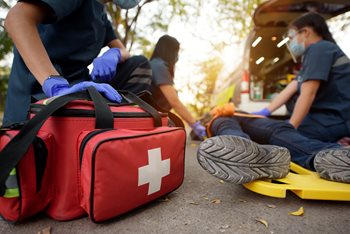
Bloodborne Pathogens Safety for EMS Providers: Prevention, Exposure, and Best Practices
Drawing from OSHA’s Bloodborne Pathogens Standard and current CDC guidelines, this course emphasizes real-world EMS application, including scene safety, sharps management, personal protective equipment (PPE), and rapid response following occupational exposure. Special attention is given to high-risk pathogens such as Hepatitis B, Hepatitis C, and HIV, as well as the legal and occupational implications for EMS professionals.
Participants will gain the knowledge and practical skills necessary to reduce exposure risk, protect themselves and their patients, and respond appropriately in the event of an exposure incident.
Objectives
Upon completion of this course, the participant should be able to:
- Define bloodborne pathogens and identify occupational risk factors in EMS practice.
- Describe the purpose and key requirements of the OSHA Bloodborne Pathogens Standard, including the Exposure Control Plan.
- Identify common routes of transmission and explain the chain of infection as it relates to EMS exposures.
- Differentiate between Hepatitis B, Hepatitis C, and HIV based on transmission, prevention, and treatment considerations.
- Apply universal precautions and Body Substance Isolation (BSI) principles during patient care to reduce exposure risk.
- Distinguish between engineering controls and work-practice controls and explain their role in exposure prevention.
- Select appropriate personal protective equipment (PPE) based on anticipated exposure and patient presentation.
- Describe proper decontamination procedures, including cleaning, disinfecting, and safe sharps disposal.
- Explain post-exposure management steps, including immediate care, reporting, and follow-up.
- Analyze the role of human factors and safety culture in preventing bloodborne pathogen exposure in EMS.
Curriculum
Chapter 1: Introduction to Bloodborne Pathogens in EMS
- Occupational risk in EMS
- Scope of the problem
- Overview of OSHA standards
- EMS-specific exposure scenarios
- Key definitions (BBPs, OPIM, exposure incidents, etc.)
- OSHA Bloodborne Pathogens Standard (29 CFR 1910.1030)
- Employer vs. employee responsibilities
- How infections occur
- Routes of transmission
- Conditions required for infection
- EMS-specific exposure risks
- Pathophysiology and symptoms
- EMS risk considerations
- Case studies and real-world implications
- Breaking the chain of infection
- Universal precautions vs. BSI
- Scene safety integration
- Sharps safety
- Needleless systems
- EMS workflow modifications
- PPE selection based on call type
- Donning/doffing techniques
- Common EMS pitfalls
- Cleaning vs. disinfecting
- Field decontamination procedures
- Handling contaminated gear and ambulances
- Vaccine requirements
- Exposure control plans
- EMS agency responsibilities
- Immediate care steps
- Reporting and documentation
- Post-exposure prophylaxis (PEP)
- EMS case study
- Sharps injury logs
- Exposure documentation
- Presumptive illness laws for EMS
- Human factors and complacency
- Safety culture
- Continuous training and accountability
Price: $24.00
Contact Hours: 2
Course Author
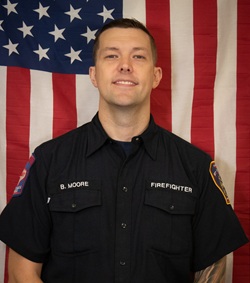
Brad Moore
Brad Moore is a dedicated public safety professional with over 18 years of service in emergency response. He has been a firefighter since 2021 and became a licensed paramedic in 2023, providing critical care in high-pressure situations. Before transitioning to Fire and EMS, Brad served for 12 years as a police officer, where he developed strong skills in leadership, crisis management, public safety, and community service. He is also a licensed EMS Instructor through the Texas Department of State Health Services, further extending his expertise in training and education for emergency responders.
Course Accreditation
Provider approved by the Texas Department of State Health Services, course provides 2.00 contact hour(s). CE Program Approval Number #: 601011.