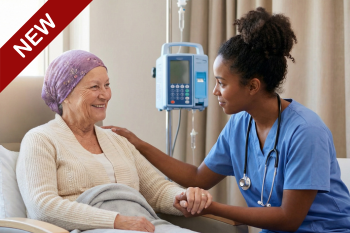
Overview of Antineoplastic Therapy
This course is offered to nurses at no charge! To take advantage of this offering, register or sign in to your Pedagogy account, click My Courses to access your dashboard. In the Register a New Course box, find the course title and click Add to List.
Course is supported by an independent educational grant from Pharmacosmos Therapeutics Inc.
Since cancer is so prevalent, nurses in all healthcare settings interact with patients with a current cancer diagnosis, as well as cancer survivals. As such, understanding the basic principles behind cancer and antineoplastic therapy is important for nurses in all clinical settings. The landscape is constantly changing in the field of oncology and antineoplastic therapy. Not only are new medications within existing classifications and new medication combinations emerging, but whole new classes of medications are being developed at an exponentially advancing rate. This course provides an overview of antineoplastic therapy in the current landscape.
State Boards of Nursing have varying positions on the role of the LPN/LVN in the administration of infusion therapy, including the administration of antineoplastic agents. A link to each state board of nursing is listed here. Competency requirements are obtained and maintained through the nurse’s employer, facility or institution.
Objectives
Upon completion of this course, participants will be able to:
- Define the goals of antineoplastic therapy in cancer management.
- List the major antineoplastic drug classifications and their general mechanisms of action.
- Identify the major adverse effects/toxicities of antineoplastic agents.
- Describe safe hazardous material handling techniques.
- Recognize common psychological effects in patients receiving antineoplastic therapy.
Curriculum
Chapter 1: Introduction
- Definitions
- Goals of Antineoplastic Therapy
- Cell Cycle and Chemotherapy
- Antineoplastic Approaches
- Neoadjuvant Therapy
- Consolidation Therapy
- Primary Therapy
- Adjuvant Therapy
- Combination Therapy
- Maintenance Therapy
- Mechanisms of Action
- Alkylating And Alkylating-Like Agents
- Antimetabolites
- Antitumor Antibiotics
- Mitotic Inhibitors
- Topoisomerase Inhibitors
- Hormone Therapy
- Miscellaneous
Chapter 5: Immunotherapy Classifications
- Monoclonal Antibodies
- Naked Monoclonal Antibodies
- Conjugated Monoclonal Antibodies
- Bispecific Monoclonal Antibodies
- Immune Checkpoint Inhibitors
- Cytokines
- Interferons
- Interleukins
- Oncolytic Virus Therapy
- Cancer Vaccines
- Antigen Vaccines
- CAR T-cell Therapy
- Tumor-infiltrating Lymphocytes
- Immunomodulating Agents
- Cryoimmunology
- Receptor Tyrosine Kinase Inhibitors
- KRAS Inhibitors
- Other Signal Inhibitors
- Myelosuppression
- Anemia
- Neutropenia
- Thrombocytopenia
- Gastrointestinal
- Anorexia
- Constipation
- Diarrhea
- Mucositis
- Nausea/Vomiting
- Xerostomia
- Pharmacologic Interventions
- Integumentary
- Alopecia
- Radiation Recall
- Hand-Foot Syndrome
- Immunotherapy Skin Reactions
- Cardiovascular
- Respiratory
- Renal/Urinary
- Neurologic
- Endocrine
- Reproductive
- Dexrazoxane
- Folic Acid and Vitamin B12
- Folinic Acid
- Mesna
- MuGard
- Palifermin
- Scalp Cooling
- Trilaciclib
- Closed System Transfer Devices
- Preparation
- Administration
- Disposal
- Bodily Discharges
- Pre-administration Activities
- Routes of Administration
Chapter 12: References
Price: $0.00
Contact Hours: 4.5
Course Author

Pamela Clark
Pamela Clark, CRNI, is an infusion nurse with the Houston Methodist Sugar Land Hospital. She has more than 35 years of experience in infusion therapy and infusion education with both licensed nurses and patients. Her experience spans multiple infusion settings including: acute care, long-term care, home infusion, and ambulatory infusion care. She also has experience in oncology and oncology research.
Read Full BioCourse Accreditation
See our Accreditation Statements page to view our accreditation information.