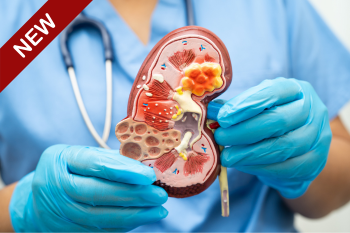
Iron Deficiency Anemia in the Patient with Chronic Kidney Disease
This course is offered to nurses at no charge! To take advantage of this offering, register or sign in to your Pedagogy account, click My Courses to access your dashboard. In the Register a New Course box, find the course title and click Add to List.
Course is supported by an independent educational grant from Pharmacosmos Therapeutics Inc.
Iron deficiency (ID) anemia is a systemic complication associated with chronic kidney disease (CKD). Anemia is linked to a worse overall prognosis, faster progression of the disease, increased morbidity and mortality rates, increased cardiovascular risk, amplified cognitive disorders, more frequent hospitalizations, and greater financial costs. This course explores the diagnosis, treatment, clinical outcomes, prognostic indicators, and forthcoming challenges associated with ID in the patient with chronic kidney disease. Crucially, addressing ID in CKD is critical for enhancing prognosis, including clinical outcomes, quality of life, hospitalizations, and survival rates. Intravenous (IV) iron therapy demonstrates superior effectiveness in enhancing hematological parameters, functional capacity, and reducing related hospitalizations. Optimizing IV iron dosing based on individual patient characteristics is essential for balancing treatment efficacy and adverse effects. Emphasizing individualized approaches, with IV iron emerging as a superior option, underscores the necessity for ongoing research to refine dosing strategies and explore novel therapies. Addressing ID through tailored interventions, including oral or parenteral supplementation, is pivotal in averting complications and improving outcomes in patients with chronic kidney disease.
Course is supported by an independent educational grant from Pharmacosmos Therapeutics Inc.
Iron deficiency (ID) anemia is a systemic complication associated with chronic kidney disease (CKD). Anemia is linked to a worse overall prognosis, faster progression of the disease, increased morbidity and mortality rates, increased cardiovascular risk, amplified cognitive disorders, more frequent hospitalizations, and greater financial costs. This course explores the diagnosis, treatment, clinical outcomes, prognostic indicators, and forthcoming challenges associated with ID in the patient with chronic kidney disease. Crucially, addressing ID in CKD is critical for enhancing prognosis, including clinical outcomes, quality of life, hospitalizations, and survival rates. Intravenous (IV) iron therapy demonstrates superior effectiveness in enhancing hematological parameters, functional capacity, and reducing related hospitalizations. Optimizing IV iron dosing based on individual patient characteristics is essential for balancing treatment efficacy and adverse effects. Emphasizing individualized approaches, with IV iron emerging as a superior option, underscores the necessity for ongoing research to refine dosing strategies and explore novel therapies. Addressing ID through tailored interventions, including oral or parenteral supplementation, is pivotal in averting complications and improving outcomes in patients with chronic kidney disease.
Objectives
Upon conclusion of this course, the participant should be able to:
- Discuss the laboratory tests used to diagnose iron deficiency.
- List at least three causes of iron deficiency in the patient with chronic kidney disease.
- Name seven FDA-approved IV iron preparations.
- Explain the IV iron administration process.
- Explain the steps to be taken by the administering clinician in the event of a hypersensitivity reaction during an IV iron infusion.
Curriculum
Chapter 1: Introduction
Chapter 2: Iron Metabolism
- Functions of iron
- Iron regulation
- Hepcidin
- Ferritin
- Transferrin
- Transferrin Saturation
- Total Iron Binding Capacity
- Erythropoietin
- Erythrocyte lifespan
- Chronic blood loss
- Protein-energy wasting
- Malnutrition
- Absorption abnormalities
- Systemic inflammation
- Ferric carboxymaltose (Injectafer®)
- Ferric derisomaltose (Monoferric®)
- Ferric gluconate (Ferrlecit®)
- Ferumoxytol (Feraheme®)
- Iron sucrose (Venofer®)
- Low molecular weight iron dextran (INFeD®)
- Ferric pyrophosphate citrate (Triferic AVNU®)
- Administration
- Hypersensitivity reactions
- Patient Education
- Documentation
Price: $0.00
Contact Hours: 2
Course Author

Pamela Clark
Pamela Clark, CRNI, is an infusion nurse with the Houston Methodist Sugar Land Hospital. She has more than 35 years of experience in infusion therapy and infusion education with both licensed nurses and patients. Her experience spans multiple infusion settings including: acute care, long-term care, home infusion, and ambulatory infusion care. She also has experience in oncology and oncology research.
Read Full BioCourse Accreditation
See our Accreditation Statements page to view our accreditation information.